

KEY POINTS
-
Ghana seeks private investment to fund climate action and clean energy.
-
Businesses urged to prepare for EU carbon rules and strengthen ESG practices.
-
Local authorities called on to include climate action in development plans.
Ghana has called for stronger climate action and increased private-sector investment to help turn its environmental commitments into jobs, industrial growth and sustainable economic opportunities.
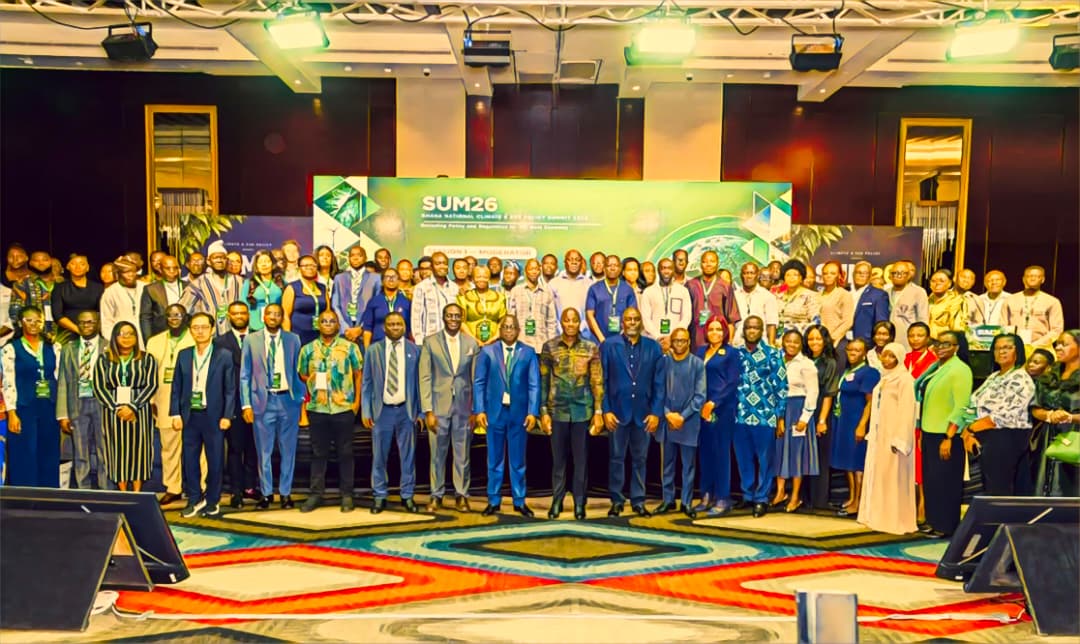
Seidu Issifu, Minister of State for Climate Change and Sustainability, made the call at the Ghana National Climate and Environmental, Social and Governance (ESG) Policy Summit 2026 in Accra on Tuesday, October 27.
The summit, organised by Intelligence Nature International under the auspices of the Office of the Minister of State for Climate Change and Sustainability, was held under the theme “Decoding Policy and Regulation for the Next Economy.”
Issifu said Ghana must move beyond climate policy commitments and focus on practical measures that strengthen economic competitiveness, protect natural resources and attract investment.
He noted that climate change affects several sectors, including agriculture, energy, transport, infrastructure, health, trade and finance. He therefore called for stronger coordination among government institutions, businesses and development partners to ensure that climate policies produce measurable results.
Government seeks more private-sector investment
Issifu said public funds alone would not be sufficient to finance Ghana’s climate priorities, including clean energy, climate-resilient infrastructure, sustainable agriculture and modern industrial systems.
He urged domestic financial institutions, international climate funds, development finance institutions and private investors to increase their participation in climate-related projects.
According to the minister, attracting investment would require credible institutions, transparent financial management, effective governance and well-prepared projects capable of securing funding.
He also called on businesses and financial institutions to incorporate ESG principles into their investment decisions, corporate governance and long-term strategies.
ESG practices assess how organisations manage environmental impacts, social responsibilities and governance standards. Issifu said businesses should treat sustainability as part of their operations and competitiveness rather than merely a reporting requirement.
Ghanaian businesses urged to prepare for new trade rules
The minister highlighted the European Union’s Carbon Border Adjustment Mechanism (CBAM), which entered its definitive phase on January 1, 2026.
The mechanism covers selected carbon-intensive products, including cement, iron and steel, aluminium, fertilisers, electricity and hydrogen. It introduces requirements linked to the emissions associated with covered imports into the EU.
Issifu urged Ghanaian manufacturers, exporters and businesses in affected supply chains to understand the requirements and improve their ability to measure, report and verify emissions.
He said government agencies, industry associations, financial institutions and regulators should work together to provide businesses with the technical knowledge needed to respond to changing international trade rules.
He added that improving energy efficiency and adopting cleaner production methods could help Ghanaian companies strengthen their competitiveness and access international markets.
Stronger carbon markets and credible ESG reporting
Issifu also called for transparent and reliable carbon markets, stressing the importance of accurate emissions measurement and verification.
He said Ghana’s participation in carbon-market activities under Article 6 of the Paris Agreement must be guided by clear rules and safeguards against double counting.
Carbon credits can generate financing for projects that reduce or remove greenhouse gas emissions. However, the minister stressed that claims about environmental benefits must be verifiable and that communities affected by such projects should be protected and share fairly in the benefits.
He also identified stronger ESG reporting and preparations for the 2026 United Nations climate conference, COP31, as priorities for Ghana.
Local authorities urged to take action
The Minister for Local Government, Chieftaincy and Religious Affairs, Mahama Ayariga, called for climate policies to be implemented beyond national-level discussions.
He urged Metropolitan, Municipal and District Assemblies to incorporate climate considerations into their development plans and budgets.
Ayariga said local authorities were essential to addressing challenges such as flooding, drought, pressure on water supplies and threats to agricultural livelihoods.
He added that farmers, women, young people and other vulnerable groups should be involved in climate-related decisions, particularly where environmental changes threaten household incomes and food security.
The summit is expected to conclude with a National Communiqué outlining recommendations for government institutions, regulators and businesses on climate action, sustainable investment and ESG implementation.